- A solid process reduces emotional errors and improves investor consistency.
- Risk management must be defined before each decision, not afterward.
- Training and orderly follow-up help build your own judgment.
Macro
A practical step-by-step guide to investing better
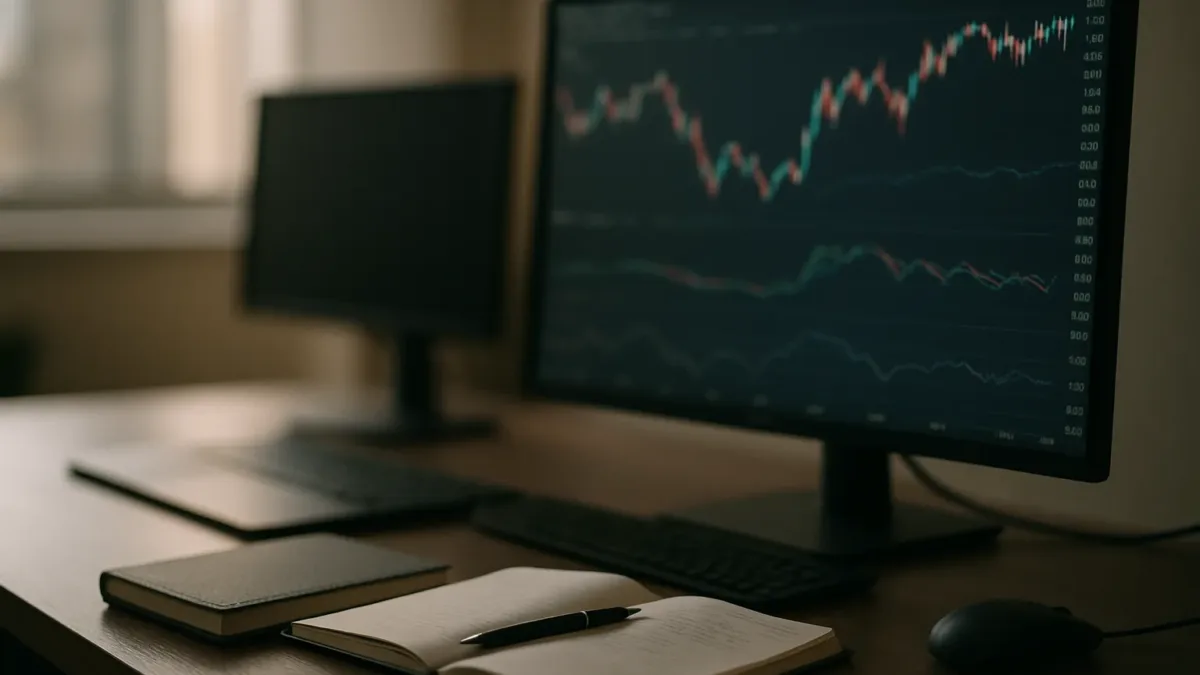
How to invest better with a clear and repeatable process: sector strength on Wall Street: A practical guide to investing
sector strength on Wall Street: updated analysis with context for investors.
A practical guide to investing: updated analysis with context for investors.
sector strength on Wall Street: updated analysis with context for investors.
Investing is not about guessing the market’s next move. The difference usually lies in the process, risk management, and consistency. When an investor improves their method, they also improve their ability to filter out noise, avoid impulsive decisions, and seize opportunities with better judgment. That foundation is useful both for beginners and for those with experience, because the most costly mistakes tend to be repeated when structure is lacking.
- 📊 A good process matters more than a single trade.
- 📈 Risk management protects capital and long-term continuity.
- 💡 Discipline turns a reasonable idea into an executable plan.
The foundation of solid investing
Define your goal and time horizon first
Before choosing an asset, it is worth answering three questions: why are you investing, for how long, and what level of volatility can you tolerate. Seeking wealth growth over ten years is not the same as generating income or preserving capital. Each goal requires different tools and a different pace of decision-making.
This starting point helps avoid a common problem: entering the right market with the wrong expectation. Many bad experiences do not stem from a necessarily bad asset, but from a strategy that is poorly aligned with the investor’s profile. That is why the first filter is not the market, but your plan.
The difference between analyzing and reacting
An investor who reacts to every headline ends up trading without context. By contrast, someone who analyzes looks for trends, relevant price zones, corporate earnings, monetary policy, or relative strength, depending on their style. It is not necessary to use every approach at once, but it is necessary to remain consistent.
It is also advisable to separate useful information from an excess of stimuli. The market generates constant news, but not all of it deserves a decision. The clearer the entry and exit criteria, the less dependent you are on daily noise.
Risk is not managed at the end
Risk management begins before opening a position. That includes defining how much capital to allocate, what maximum loss to accept, and how that trade will affect the overall portfolio. A common mistake is to think first about potential returns and only afterward about capital protection.
Without a risk rule, two or three wrong decisions can damage months of work. By contrast, when position size is controlled, the investor can accept that being wrong is part of the process without compromising continuity.
Mistakes that slow an investor’s progress
Confusing activity with progress
Trading more does not mean investing better. In fact, overtrading usually increases commissions, emotional mistakes, and mental fatigue. A good investor understands that waiting is also a decision. Patience, even if it seems passive, can be a real competitive advantage.
This idea is especially important during sideways markets or periods of macroeconomic uncertainty. In those contexts, selecting fewer opportunities more carefully usually adds more value than chasing every short-term move.
Following others’ ideas without personal validation
Using external references can be useful, but it should never replace personal analysis. When a decision depends entirely on other people’s conviction, it becomes harder to hold it during periods of volatility. The usual consequence is selling poorly or entering late.
Developing your own judgment does not mean isolating yourself, but learning to assess arguments, context, and timing. That is where professional guidance and well-structured training can make an important difference.
How to apply it
Create a simple review routine
Start with a weekly routine. Review your portfolio, note which positions still support your thesis and which no longer do. Also observe whether your total exposure fits your profile. That review provides perspective and reduces improvisation.
If you follow the U.S. market, remember that Wall Street’s usual opening is at 15:30 Madrid time (08:30 Mexico City) during European winter time and 14:30 Madrid time (07:30 Mexico City) during European summer time. Being clear on these reference points helps you plan rather than react without a method.
Use simple, measurable rules
Define your minimum entry conditions in writing. For example, a favorable trend, a clear technical level, maximum risk per trade, and a coherent target. You do not need a complex system to improve results. You need rules that you can repeat and review.
Then, record every decision. An investment journal makes it possible to identify repeated mistakes, emotional biases, and successful patterns. What is not measured is rarely improved consistently.
Prioritize training and guidance
Learning shortens the path to reducing mistakes and improves market reading. That is why many investors make more progress when they combine analysis, monitoring, and an organized methodology. It is not just about receiving ideas, but about understanding why an opportunity makes sense and how it fits into an overall plan.
If you are looking for a more professional framework to organize your decisions, the next logical step is to rely on a service that helps you filter scenarios, manage expectations, and reinforce discipline.
Conclusion
Investing better does not depend on finding a magic formula. It depends on building a process that you can sustain across different market environments. Goal, time horizon, risk, and discipline form a much more useful foundation than chasing the perfect trade.
If you want to move forward with a more structured approach, review the subscription plans. It can be an effective step toward improving your judgment, following the market in a more organized way, and making decisions with greater consistency.
This article is general financial information and does not constitute investment advice.
Keep reading on the blog: Core U.S. PCE: the data moving the stock market today and U.S. jobless claims: today’s key macro takeaways.
Sources: Reuters Markets.
Free community
Register for free access to the community forum
Share analysis, ask questions and connect with other investors — free, in under two minutes.
Create free account